Thursday, June 15, 2006

Ken Silverstein Strikes Again

The former Los Angeles Times writer who is now the Washington reporter for Harper's Magazine has yet another article about the murky connections between ERHC Energy and Rep. William Jefferson, and this one proves his contention in our email exchange (see below) that there was far more to the connection than just what we had originally suggested. He trots out the information his source gave him for the first time.

Ken Silverstein traces connections between Noreen Wilson, an early ERHC investor, and Phil Nugent, Sr. of Houston and Phil Nugent, Jr., of New orleans to crooked Palm Beach attorney Donald Mintmire, Jr., another Kentucky man now in prison, the bankrupt Global Environmental Energy Corp. (GEEC), the former Sao Tome Secretary of State Mateus Rita and finally to President Ferdinand de Menezes and on to Rep. William Jefferson (D-La.) himself.

Much of the piece indicts the players by association, and Silverstein admits that there's nothing but a former executive's camapign contributions to allege against ERCH Energy's long-ago executives and consultants. Wilson has not been active in the company for years, and neither have the Nugents, but both are said to still have substantial stakes in ERHC securities.
It is unclear why no one has obtained a shreholder's list to ascertain those investments.

The inference is that some $4,500 in donations Wilson made to Jefferson shaped Jefferson's approach to President de Menezes at a time when he was allegedly considering voiding awards to ERHC of valuable oil concessions in the Nigeria-Sao Tome and Principe Joint Development Zone.

Whenever De Menezes, who got a $100,000 contribution to his 2002 campaign from ERHC chairman Sir Emeka Offor, met with Jefferson (on four occasions recently), Jefferson allegedly countered De Menezes' desire to void the rights with encomiums for ERHC, a source - either Doc, Meridian or Mutwadadi, I suspect) told Silverstein.

The problem with that, of course, is that it is far more likely that De Menezes was on the take and that Jefferson met with him to pay him off than that De Menezes was really planning to revoke the rights. Silverstein seems to want to make De Menezes an honest player for strategic purposes. If they can make the Sao Tome cocoa exporter look clean enough, he might be the critical figure in the drama to come.

Sao Tome's parliament voted against voiding the rights in 2005, and it's unlikely that De Menezes would lead the charge to do so again (unless I get him mad), even given his public statements about ERHC's rights costing Sao Tome a lot of money they would have otherwise earned. To keep the issue in perspective, just keep remembering that he said so with $100,000 of our CEO's money in his pocket.

And whose strategic purposes? It's sad to say that Harper's now owes its existence to companioes like Conoco Phillips, without whose full-color back-page ads the magazine would not survive, and other philanthropic energy giants that want ERHC's rights so very desperately - and whose own crooked history in Nigeria, Sao Tome and especially Equatorial Guinea dwarf the unproven allegations against ERHC.

It all shows the Machiavellian academic side of R. Dobie Langenkamp, who is probably stirring the high-brow Harper's pot on Big Oil's behalf with just enough factoids to make it seem interesting to the Justice Dept., the real audience for the piece.

Next we should expect Anadarko's proxy, Senate Energy chief counsel Judy Pensabene (a Langenkamp student married to APC's governmental affairs lobbyist), to start whispering about a Senate investigation.

Every journalist worth his salt can play the game Silverstein has, establishing (as much as a castle in the air can said to be established) gossamer webs of connections between "colorful" characters and an appearance that someone, somwhere in all of it, did wrong.

What Silverstein has really done this time, however, is to concretely tie Wilson to Jefferson, although whether on behalf of her former role and any present investment in ERHC Energy or her cloudy ties to GEEC is unknown.

One of the sources feeding him information had a calendar from De Menezes' office to work from or managed to trace his meetings with Rep. Jefferson through the Sao Tome press or Jefferson's own press releases. The assault was nicely shaped, like the Attorney General's report, even though it lacked real bullets Somewhere in Oilville, a crafty corporate communications director is being toasted by the boss.

The meetings are new stuff insofar as the entire investigation, and while we never learn how proximate in time Wilson's contributions to Jefferson were relative to the meetings, and no link from ERHC to Jefferson is established except by his source's saying (as unprovable hearsay) that the company was discussed - and indeed the whole web remains unsupported by more than association - the piece is a better insight into the various relationships than we have ever had before, and the Wilson contributions provide a concrete foundation for investigators to work through if they choose.

I'm anxious to see how Phil Nugent, Sr.'s accountant, Norma Reynolds, plays it in her role as moderator chcr on the I-Hub ERHC Energy board. It's positively fascinating that even with all her deletions, the site is still visited more often than Gordon Stamper's honest and upright JDZ board next door.

Here is Ken's piece:

Meet William Jefferson's Political Supporters
Posted on Wednesday, June 14, 2006.
By Ken Silverstein
.
Sources

Congressman William Jefferson of Louisiana is currently under investigation by the FBI for allegedly taking bribes from a company seeking business in Nigeria and, as I reported last week, the feds are apparently also looking at his ties to São Tomé and to some Americans doing business in that African country. Since then, I've received additional information that points even more strongly to a São Tomé-Jefferson connection.

It gets complicated, but stay with me. First I'll explain the history of a small energy firm called ERHC, which was born in Lafayette, Louisiana but is now based in Houston. Next, I'll discuss a few people connected to the firm and to a second company called Global Environmental Energy Corp. (GEEC), whose president, Noreen Wilson, has played a key role in ERHC. The cast of characters here includes a Texas wildcatter, a convicted felon, and a reverend whose company invested in an adult entertainment firm. Lastly, we'll get back to Jefferson, who has curious ties to both ERHC and GEEC.

It all starts in 1997, when ERHC—despite having no revenue and just a single full-time employee—won extensive energy rights in the tiny island nation of São Tomé. In exchange for a $5 million payment to the government for the right to market the country's oil potential, ERHC was awarded a minimum of four oil fields, exempted from all taxes, and granted half the future profits in STPetro, a state oil company created by the deal. Noreen Wilson, a lobbyist who helped negotiate the deal for ERHC and who became a major shareholder, was appointed to STPetro's board and made ERHC's chief financial officer.

In 2003, I wrote about ERHC's agreement in São Tomé for the Los Angeles Times. “Was the deal a little rich?” Wilson said in an interview. “Yeah, it probably was, but who else was going to take the risk back then? They couldn't give their oil away, let alone get someone to pay them for it.” But Andrew Latham of Wood Mackenzie, an energy-consulting firm in Edinburgh, Scotland, said the original deal was far out of line with industry standards and said he'd never seen a company “get a stake like ERHC obtained in São Tomé.”

In São Tomé, plenty of people have questioned the deal. A December 2005 report by São Tomé's attorney general said that the country's lead negotiator on the agreement, Carlos Gomes, a nephew of the prime minister, was awarded an executive position at STPetro and a salary of thousands of dollars a month paid by ERHC. The report said that Mateus “Nando” Meira Rita, a former São Toméan Secretary of State, became STPetro's general manager and also received a generous salary as an ERHC consultant. SEC records show that in 1998 ERHC named Rita as its Vice President of International Affairs and granted him 500,000 shares of company stock valued at $158,203.

Such was the controversy that the agreement was subsequently renegotiated twice, first in 2001 and again in 2003—that second time under President Fradique de Menezes, who had initially pledged to revoke ERHC's privileged position (which he described as “unconscionable”). The current deal is less favorable to ERHC than the original—the company has relinquished its rights in the state oil company in exchange for other benefits—but still favorable enough that when it was signed, dozens of civic and political leaders in São Tomé issued an open letter that accused President de Menezes of selling out the national interest. “As a shareholder, I'm thrilled,” Noreen Wilson told me at the time. “Everyone was focused on what we gave up and no one added up what we got.”

After the renegotiation was concluded it was discovered that the Nigerian owner of ERHC—a reported billionaire with close ties to his government—had made a secret $100,000 contribution to a company controlled by President de Menezes; the president said that the money was for his political campaign. According to the attorney general's report, “several São Toméans holding interests in ERHC” participated in the renegotiations, including the above-mentioned “Nando” Rita, who was then São Tomé’s Foreign Minister and who “still owned 500,000 shares in ERHC.”

Here's what the attorney general's report said about the contract:

[A]t every stage there is the suggestion that ERHC and its [Nigerian parent company] Chrome may have made improper payments to government officials or provided benefits to their families in order to secure the assistance of such officials in continuing the contract . . . [The contract,] if enforced, will result in the possible loss of nearly $60 million in signature bonus revenue which would otherwise flow to the government of São Tomé . . . This amount compares to São Tomé’s total annual budget of $50 million.
After the attorney general's report came out, the Joint Development Authority (JDA), which oversees energy development in a zone controlled by Sao Tome and Nigeria, put a statement on its website that rejected the report “in its entirety.” The JDA's chairman and executive director is Carlos Gomes, the former STPetro official whose salary was paid by ERHC and whose son, Noreen Wilson told me back in 2003, was provided an academic scholarship at the University of Louisiana at Lafayette from ERHC.

ERHC has an unusual history and a host of colorful characters have been involved with the firm, such as ex-CEO Sam L. Bass Jr. (now deceased), a former wildcatter who had done business in Nigeria and put out oil fires in Kuwait after the Persian Gulf War, and Phil H. Nugent, a Houston-based oil and gas consultant who was a major shareholder in ERHC and big promoter of the firm.

Then there's Reverend Ernie Chu, who, according to SEC records briefly served as treasurer and chief financial officer of ERHC in 1999. Chu is now an assistant minister with Religious Science of Fort Lauderdale (“The Infinite,” reads his bio, “is always loving and supportive in allowing us to create lives filled with prosperity, fulfillment and love.”) and has undergone miraculous “surgery” at the hands of Brazilian faith healer John of God, apparently with good results. In addition to his religious pursuits, SEC records show that Chu and someone named Vito Lamonco are the beneficial owners of Corporate Builders L.P., which was a major shareholder in Jill Kelly Productions, “one of the first adult entertainment movie production company created by an adult film star.” (You may not want to click on that last link if you're at work or bothered by the image of a mostly naked woman in a cowboy hat.)

In an interview by phone, Chu said that he got involved with the ERHC through Noreen Wilson and that he and a group of investors “put some money into the deal. I sold most of my stock. We did okay after it looked like we were going to get wiped out.” Chu described his own company, Corporate Builders, as “venture builders,” and explained that the company helps firms bring money in and provides management assistance. He said the firm acquired its shares in Jill Kelly Productions from an investment bank that was a client of Corporate Builders and that “the intention was to distribute the shares to individuals” associated with Corporate Builders, but that never happened because the porn company went bankrupt. Chu said that the activities of Corporate Builders are currently “winding down” and that ERHC and Jill Kelley “were both quite unusual and different from our core business,” which he said was working with medical and technology firms.

The story of GEEC formerly known as Life Energy & Technology Holdings Inc., is perhaps even more remarkable. That firm is registered in Louisiana but lists its principal office in the Bahamas. As I mentioned above, GEEC's president is Noreen Wilson, the mover and shaker involved with ERHC. Its registered agent is Phil C. Nugent, the son of Phil H. Nugent, the latter who also has ties to ERHC. Nugent Sr. is also listed as chairman of a firm called Green Energy Management, which has been a partner of GEEC. (If you check the Louisiana Secretary of State's website you find that the two Phil Nugents have had a hand in a number of small companies.)

According to its corporate filings, the company had plans to turn solid waste into electricity with its revolutionary Biosphere ProcessTM, which would also produce a “pulverized powder” that could be sold as a by-product for the building industry; part of the plan at one point was to introduce the Biosphere Process in Libya, followed by other installations in sub-Saharan Africa. GEEC has over the years claimed to have billions of dollars worth of contracts (in China, among other places) but its ship never came in and the company filed for bankruptcy last year. In a post-bankruptcy story about the company, Barron's, which has also reported on some of the odd characters involved in the story, said GEEC “has reported no revenue for 2 1/2 years, and its latest balance sheet showed a total of $3 in cash.”

But just a year earlier, GEEC/Life Energy still had high hopes. It announced that it would receive $450 million in financing arranged by Diamond Ridge Advisors, a company controlled by a man named William Kent Trumble. That money never materialized, which is perhaps not surprising given that Trumble, according to a recent story in the Fort Mill Times, is currently under investigation in Pennsylvania for failing to deliver “on a $3.5 million pledge to help build a YMCA” and for possibly taking “$22,000 earmarked to help a Bible college” and not following through “on his pledge to convert it into $2.5 million.”

The Fort Mills newspaper reported that records from the Kentucky State Reformatory showed that:

Trumble was sentenced to five years in jail for two felony counts of second degree forgery and five felony counts of theft by deception. His sentence started there in March, 1978, and he was transferred to the Frankfurt Career Development Center in May, 1978, and stayed there until he was paroled in January, 1979 . . . Trumble's roots in Fort Mill extend to the waning days of the PTL, Jim and Tammy Faye Bakker's former religious empire and theme park based in what's now Regent Park. He befriended people tied to the PTL.
A second person affiliated with the company has also had problems with the law, namely Donald Mintmire, a Palm Beach, Florida, attorney who did legal work for GEEC/Life Energy. SEC filings show that Mintmire had also done work for ERHC and for a firm called Power Interactive Media, where Noreen Wilson was a consultant. Mintmire, according to various news accounts, was sentenced to jail time earlier this year for obstructing a grand jury investigation into the collapse of a company called Clements Golden Phoenix. A 2005 story in the Stuart News said that Golden Phoenix “was supposed to get rich exporting Florida citrus to China but instead cost investors millions.”

Now we come full circle to Congressman Jefferson, who apparently went to bat for ERHC in regard to its controversial stake in São Tomé. A well-placed source who provided detailed information said that President de Menezes of São Tomé met with Jefferson at least four times in the United States: in the congressman's office in May and September of 2002, in June of the following year in New Orleans, and at the Ritz-Carlton Hotel in Georgetown that same month. The source said that the above-mentioned “Nando” Rita—the ERHC shareholder who worked with the company when it was negotiating its deal and who later became a member of de Menezes's government and close advisor to the president—pushed de Menezes to meet with Jefferson.

“ERHC, through ‘Nando’ Rita,” said the source, “kept telling [de Menezes] that Jefferson would help São Tomé, and Jefferson, in turn, kept telling him that ERHC was a wonderful outfit, just as the president was considering voiding their previously-acquired rights in a review he did of all the oil-related agreements signed by the previous administration. He was ready to void the ERHC deal. Then he didn't move forward. I cannot say it was Jefferson who changed his mind. But I cannot say it wasn't a factor either.”

On April 16, 2003, six days after São Tomé and ERHC concluded the final renegotiation of the company's energy rights, Wilson donated $500 to Jefferson, as did two other people, Wayne Hartke and Weldon Rougeau. Hartke, the son of former Indiana senator Wayne Hartke, was an ERHC shareholder and once served as its general counsel. Rougeau is the former head of the Congressional Black Caucus Foundation, which, several months after the donation was made, signed an agreement with São Tomé that called for the Caucus Foundation to promote development in the country. This deal was made with the backing of Jefferson, who was then the Caucus Foundation's chairman. (Rougeau, according to the source cited above, later visited São Tomé on at least two occasions, as did several other members of the foundation.)

As to Jefferson and GEEC, as I mentioned in my last story, the company helped cover the costs of the congressman's February 2004 trip to Nigeria, São Tomé and two other African countries in his capacity as co-chair of the Africa Trade and Investment Caucus. Several other firms also pitched in, including iGate, the Kentucky firm whose owner recently pleaded guilty to bribing Jefferson to promote deals for the company in Nigeria, and Verizon. According to Africa Energy Intelligence, GEEC “won a concession in Nigeria's offshore last year but had to abandon it because it was unable to pay the front-end bonus.”

In 2004 and 2005, Noreen Wilson made an additional $4,500 in contributions to Jefferson. The donations were made through a company called HSW Group and a number of other people affiliated with the firm —all but one with the last name of Wilson—kicked in another $11,500 to the congressman over the same period. (The one non-Wilson to contribute was June Nichols, Deputy Administrator of the U.S. Small Business Administration under Ronald Reagan. HSW was retained in 2003 by GEEC/Life Energy to represent it in Washington, and Nichols was placed on its advisory board.)

None of this shows that Jefferson received anything more than campaign contributions and a travel subsidy from people linked to ERHC and GEEC. What it does suggest, along with other published accounts and what I've been told by a source familiar with the ongoing investigation, is that Jefferson's ties to the companies and to Sao Tome, and ERHC's involvment in that country, are of interest to investigators. Most suggestive of all is that a U.S. District Court issued a search warrant last month for “documents related to [ERHC's] correspondence with foreign governmental officials or entities in São Tomé and Nigeria.”

Note: Noreen Wilson, ERHC, Rougeau and Robert Trout, Jefferson's attorney, did not reply to phone calls or emails requesting comment.

Tuesday, June 13, 2006

Discovery? Daukoru Talks Of 'Next Thing' In JDZ

Has OPEC President and Nigerian Oil Minister Dr. Edmund Daukoru dropped a broad huint about coming good news gfrom the JDZ?

Maybe, but it hasn't helped our share price much, which has fallen from around $0.48 late last week all the way back to $0.40 this morning.

Just before 1pm, the price is $0.407 x $0.415, with ERHE down $0.03 for the day on modest volume of 794,589 shares. At 12:59pm, Sells of 553,389 outnumber Buys of 221,200, with 20,000 shares trading on the cusp.
Dr. Daukoru's comment to the Nigerian daily newspaper Vanguard of Nigeria are a little too general for our tastes, but it does sound faintly like he's saying that an announcement about the true dimensions of the discovery iomn Block 1 may be forthcoming from Chevron. My gut tells me that would come in about a month.

Here is the Daukoru comment, lifted from the I-Hub board:


Q:) The JDZ has been quiet lately. What is really happening there?

[Daukoru:] JDZ has been quiet, that is no news, it could indeed portend good things. After awarding blocs, they blocs have to be administered through the nitty gritty. How far of a success, we are yet to establish. The initial signals are good. We have signed the PSCs like you know very well. So we are into the quiet stage and the next thing should be the announcement of a big discovery and that would be the time for popping champagne.

Saturday, June 10, 2006

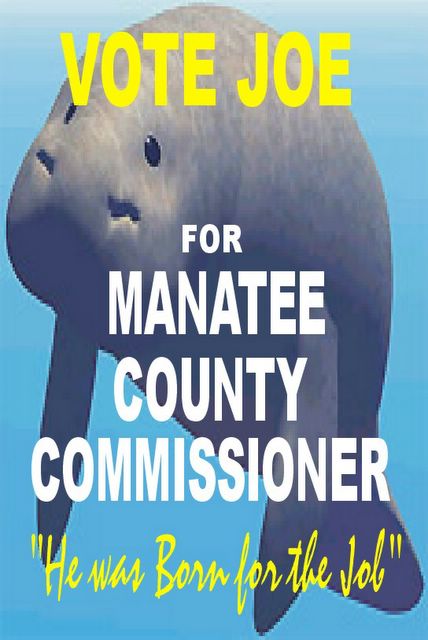
Joe for Manatee County Commissioner (Who's that handsome guy?)


My dear friend Walldog was the first to propose a fitting campaign poster for my race for Manatee County, Fla., County Commissioner, and he even managed to get my pal Umbra to pose for it.
Joe Shea/The American Reporter
If you're the creative (or political) type, please don't hesitate to send me your proposed poster for publication here.


I will be deeply grateful for any campaign contributions. Make checks payable to Elect Joe Shea, 4119 61st Ave Ter. W., 305C, Bradenton, FL 34210. The maximum donation by cash or money order is $100; anything larger must be made by check. The maximum allowable contribution is $500. For campaign reporting purposes, all contributions must include your name, address and type of employment.

This message Paid for and Approved by Elect Joe Shea, Democrat for Manatee County Commissioner, Dist. 4.

Friday, June 09, 2006

ERHE Will Rise Again

It must be frustrating for Exxon, Anadarko and the rest of the majors who'd like to see ERHC Energy out of the picture - here we go again, shrugging off some heavy blows and corporate reluctance to blow our horn while rising from the rubble once again.

ERHC Energy's share price is up again this morning, hitting $0.49 in one small (2K) purchase in the first trade of the day. Volume is a modest 228,000 shares at 10:21am, and the price has fallen back to $0.451 x $0.47.

But whatever the current price, the amazing resilience of this stock is the real story. Investors have seen it drop nearly $0.20 in one day and then recover that amount and more - on the same day!

So to those who follow it closely over time, this week's performance - a modest gain of 26 percent from its low of $0.38 to its high of $0.48 (we'll let that one $0.49 sale go) - as amazing as it is, is not all that unusual or even unexpected.

Who got in one the ground floor at $0.38, $0.39. $0.40?

Well, at least some of those folks will be crowing over on I-Hub and Raging Bull.

Even if ERHC Energy becomes caught up in the Jefferson investigation, as some seem to think it will, there's not much basis for our remaining a $0.50 stock much longer.

Consistent with my theory that we will ape the two-to-three-year performace of stocks like FEEC, HDY, TMY, and IVAN, I believe it will rise substantially before the year is out even if aspects of the investigation do bust out into the news.

I am not certain, actually, that we are over the hump yet; we still could fall way back on a bad day and feel some real hurt, but the likelihood is that after a much less dramatic pullback (such as we're seeing now, at 10:40am ET), we'll start that long, slow, agonizing climb into $1.50 range that we have so long anticipated.

You know what they - you can't keep a good man down. ERHC will rise again.

Thursday, June 08, 2006

Back And Forth With Ken Silverstein

As the following exchange will attest, Ken Silverstein is making an honest effort to report what he's learned about any association between the Jefferson case and the warrant served on ERHC Energy. I can't assess the quality of his non-AEI source on the issue, but I would always take his own assessment as a secure and careful one.

Our back and forth on this issue may prove to be a little enlightening:


You know I respect you as lot, Ken, but your tie-to-Jefferson angle (http://harpers.org/sb-william-jef-1149716306.html) is awfully weak. All the "African Energy Intelligence" (sic) article says is "We understand the operation was linked to the FBI investigation into Jefferson."

They only understand it because I thought it was, and said so long before either of you did, in ERHC On The Move. You think there's a tie because they think there's a tie because I think there's a tie. I think there is, but that doesn't lay much of a foundation for a statement that will cost lots of investors lots of money (10 percent of their holdings today), but won't cause the folks at Exxon and Chevron and all the others the LA Times reported are being investigated by Senate Commerce for huge bribes to Obiang to lose a minute of sleep.

It just seems unlike you to pile on the little guy when the giants are far worse. And I may be wrong, but I think you have conflated two different publications, both of which are unreliable, one being African Energy (http://www.africa-energy.com/) and the other Energy Intelligence (http://www.energyintel.com/).

Best,

Joe Shea
www.erhc.blogspot.com


Ken responded:

joe,

you are wrong on all of this. i did not conflate the two newsletters, AEI, as the link shows, has nothing to do with the others. and aei is a good solid publication that i trust.

more importantly, i would never publish something because you -- or AEI or anyone -- said it. i published the item on jefferson based on reporting and interviews. in fact, the EG section was much longer. it's offensive for you to suggest that i'm simply reporting something because someone else said it.

whether you believe it or not, i never read what you wrote. no disrespect to you, as you apparently do some reporting, but i assiduously avoid all the stuff on erhc on the web because in my view much of it is rumors and garbage by self-interested parties. (the only thing i came across of your was that nugent's lawyer had sent you a letter saying he had no links to geec, which i don't believe for a second is true).

what's really odd about your letter is that you apparently, based on your email, seem to be repudiating your original story. first you tell me that i stole the story from your original report, which i did not do, and then you tell me that my story is wrong.

ken


I had to admit my eror about AEI, yet I still had questions, and responded:

I learned that you were right that AEI is a real publication; there are those two well-known letters I mentioned and this one is not very well-known at all. However, as the portion I published stated, they just expressed an
opinion and there was no foundation for it. You said you had one other source and AEI, which apparently had no source.

I suggested a connection to Jefferson on May 5, based on comments from Bruce Alpert of the Times-Picayune and others. But when I suggested it, I emphasized two or three times that there was no other foundation for my surmise. I doubt that your source had any any other source than that, esecially if it was from the Justice Dept., as they read my site as well (the server info shows that).

I didn't say I was wrong or that you were wrong, if you look carefully; I said neither of us had a foundation for asserting it as fact, as you did in going beyond what AEI said - turning it from "we think" to "they said" - and citing another unnamed source.

I appreciate your candor as to my reporting. The real problem is that you and so many others, among them Chip Cummings, ignore the AG's conclusion that there was no evidence against ERHC and the two governments' formal repudiation of his findings, as well as the huge bribes asserted against Exxon, Chevron, Devon Energy and others - our competitors or former partners - which are the real story.

Best,

Joe


Ken responded with a well-crafted comment:

joe,

sorry, but aei is well know, it's based in paris which may be why you are not as familiar with it, but it is highly regarded and has broken news over there.

aei does have a source or sources, it did not just make the story up.

I wrote in story that there was "strong evidence pointing to a São Tomé connection." and there is. my source may or may not read your stuff, i have no idea, but i am certain his information does not come from whatever you wrote.

i have no idea who cummings is. as to the majors, of course they are not white knights, i have reported numerous times on their unscrupulous ties to africa, including in yesterday's story. but if you think erhc is a bunch of white knights, i think you are sadly mistaken.

as to your reporting, if it was unclear, i am not that familiar with it, know you mostly thru our emails over the years, and can't really say much. but you at least seem to have some interest in looking for information. i was not trying to lump you in with the people who simply throw up garbage as i assume based on our correspondence that you are not one of those people (they send me endless crazy emails, it is pathetic and sad.)

ken


Again, I want to emphasize that evidence that the ERHC search warrant is related to the Jefferson affair is thin; obviously, though, beyond the warrant, there are connections with Phil Nugent and Noreen Wilson that are being pursued by the press, if not the Justice Dept.

Those who read of deletions from the ERHC Energy board should be aware that the moderator, chcr, is Phil Nugent Sr.'s accountant, and according to Doc she is the person who attacked this site with thousands of obscene emails last year, ultimately forcing us to turn off our Comments feature.

Yesterday's dramatic 10 percent drop in share price reflects both the AEI and Ken's Harpers.org articles, I think, and today's rise in price may be temporary. In fact, despite substantial volume, I do see it dropping on my ADVFN screen now. Volume is certainly picking up, but only time will tell the consequences of that.

Currently, at 10:21:35am, Buy volume outpaces Sells by 899,326 to 500,857 with 168,626 unidentified. The current price is $0.426 x $0.43, down $0.015 in the past 20 minutes, and down $0.04 from the $0.47 high earlier today.

Nugent, Wilson, The Kitchen Sink Figure In Jefferson Probe, Silverstein Says

If you read the last post, you will see that former LA Times Washington bureau reporter Ken Silverstein, whose article in the Times put ERHC Energy of the map back in May 2003, picked up on the African Energy Intelligence article and said he thinks the search warrant is linked to Rep. William Jefferson because African Energy said they thought it was linked.

The only reason they think it was linked, I told him in a note tonight, is because ERHC On The Move said we thought they were linked
on May 5.

Yesterday, I'd written, "The article is given away when a personal opinion that ERHC is linked to Jefferson awkwardly peers out of a long, allusion-filled paragraph:


We understand the operation was linked to the FBI investigation into Jefferson.


And today, Ken said:

On May 22, I reported that investigators recently hit ERHC with a search warrant for “documents related to correspondence with foreign governmental officials or entities in São Tomé and Nigeria.” According to my source and to the report in African Energy Intelligence, the warrant is linked at least in part to the Jefferson investigation.


And here is what I said in my May 5 post:


According to information received by ERHC On The Move, however, there may a connection between the search warrant served yesterday and an investigation into the bribery allegations concerning Rep. William Jefferson, Democrat of Louisiana.

This blog has received several requests for information in association with that investigation from Washington-based investigative reporters, who have focused their inquiries on ERHC Energy investor Phil Nugent. It is not known whether Nugent or Jefferson is a target of the current investigation.


Here is Ken's June 7 article from the Harper's Magazine Website blog, in full:


William Jefferson: Tollbooth Operator on the Road to Africa
Posted on Wednesday, June 7, 2006. By Ken Silverstein.

SourcesUpdate: the item we reported yesterday on the home jointly owned by Letitia White, a lobbyist and former staffer to Representative Jerry Lewis, and an owner of defense contractor Trident Systems, has become part of a much larger unfolding story. Check out TPMuckraker [1][2][3], which also reported the story yesterday, and the New York Times, and look in your newspaper tomorrow. A number of reporters will likely be weighing in.

As has been widely noted, Rep. William Jefferson, the Louisiana Democrat who reportedly keeps his cash in the icebox, is under investigation by the FBI for allegedly taking a bribe from the owner of iGate Inc. to arrange deals for the high-tech company in Nigeria and several other African countries. According to court records, the FBI is also looking into “at least seven other schemes in which Jefferson sought things of value in return for his official acts.”

The invaluable African Energy Intelligence, a Paris-based newsletter, reported this week that several of the seven cases “involve oil groups seeking to establish themselves” in Nigeria and other African countries, including Equatorial Guinea, Congo-Brazzaville, and São Tomé. Jefferson frequently met the leaders of all those countries, the newsletter said. I hadn't previously heard anything on a Congo-Brazzaville–Jefferson connection, but I have been told by a source familiar with the investigation that the congressman's links to Equatorial Guinea are under scrutiny. There's strong evidence pointing to a São Tomé connection as well.

With the support of lawmakers like Jefferson, Africa has emerged as a major American oil supplier in the last decade. Jefferson and his staff strongly supported the African Oil Policy Initiative Group (AOPIG), an ad hoc panel of U.S. government and energy industry officials that described African energy as a “vital interest” of the United States. In an article in 2003, Alexander's Gas & Oil wrote that Jefferson was calling for a “full-fledged makeover of the U.S. strategic relationship with Africa” to take advantage of its “petroleum potential.”

In November of 2000, Jefferson led the first-ever Congressional delegation to Equatorial Guinea, taking along representatives from Baton Rouge–based Shaw Global Energy Services and from CMS Energy, which had extensive interests in the country that were later sold to Marathon. When it got involved in Equatorial Guinea in the mid-1990s, CMS allowed a company controlled by the country's president, Teodoro Obiang, to obtain a stake in two joint ventures. Even by the standards of Equatorial Guinea, a textbook kleptocracy, this was a friendship with remarkable benefits. Obiang put no money down for his stake—which was worth about $29 million as of 2004—and received $1 million in dividend payments between 2003 and 2004 alone, according to a Senate investigation.

The government of Equatorial Guinea was so pleased with Jefferson's visit that it presented him with a key to the capital city of Malabo. Jefferson also stopped in São Tomé and Nigeria on the trip; Shaw Global picked up the congressman's travel tab, which came to $6,872. After he returned home, Jefferson began lobbying for the U.S. to reopen its embassy in Equatorial Guinea—it had been closed in the mid-1990s, in part because the government threatened the American ambassador—a step the Bush Administration reauthorized in late 2001.

Another Louisiana firm with ties to Jefferson is Schaffer Global Group. Back in 2002, according to interviews and documents I have received, Schaffer Global was unsuccessfully chasing potential business deals in Equatorial Guinea in conjunction with several other firms, including a lobbying and business-development company called AfricaGlobal that worked for the Obiang regime (and which is now owned by Schaffer). In addition to trying to drum up American investment in Equatorial Guinea, AfricaGlobal also sought to improve ties between Obiang and the United States. At least three people from Schaffer or AfricaGlobal made modest campaign contributions to Jefferson; one of them, Warren Weinstein, served on the AOPIG with Melvin Spence, an aide to the congressman.

Gustavo Envela, an Equatoguinean national who lives in the United States and who briefly served as a consultant to AfricaGlobal, said that Jefferson was a key congressional ally of AfricaGlobal and was enlisted to help in Equatorial Guinea “because of his close relationship” with the Obiang regime. (I'm not suggesting that any of these firms bribed Jefferson, only that the congressman was close to the hideously corrupt government of Equatorial Guinea.)

A second source familiar with Equatorial Guinea told me that when Obiang came to Washington for visits, Jefferson would meet with the dictator at his hotel (which on at least one occasion was the Hay-Adams). This person also said that one of Jefferson's Hill aides was always assigned to accompany government officials from Equatorial Guinea when official delegations were in town.

Jefferson also has interesting ties to São Tomé and to some Americans doing business there, specifically people linked to ERHC. That's the small Texas-based firm that had zero revenue, one full-time employee, and a controversial Nigerian owner (whom I'll discuss below), but which obtained lucrative oil rights in tiny São Tomé. On May 22, I reported that investigators recently hit ERHC with a search warrant for “documents related to correspondence with foreign governmental officials or entities in São Tomé and Nigeria.” According to my source and to the report in African Energy Intelligence, the warrant is linked at least in part to the Jefferson investigation.

Here's what ties Jefferson to people from ERHC and suggests that the warrant slapped on the firm might be part of the Jefferson story:

In February 2004, Jefferson again traveled to Nigeria, São Tomé, Equatorial Guinea, and Cameroon. That trip was paid for by iGate, the firm at the heart of the current investigation, and several other companies, including one that is now called Global Environmental Energy Corp (GEEC). According to records filed with the Louisiana Secretary of State, GEEC's principal office is in the Bahamas; its president is Noreen Wilson, and its registered agent is Phil C. Nugent. The latter is the son of Phil H. Nugent, a Houston-based oil and gas consultant who, when I met him three years ago, was a major shareholder in ERHC and major promoter of the firm. Noreen Wilson is a Beltway lobbyist and ERHC shareholder who helped negotiate the company's deal in São Tomé. (Phil Nugent Sr is also linked to GEEC through Green Energy Management, a firm that partnered with GEEC and of which he was chairman.)

So GEEC, which helped pay for one of Jefferson's trips to Africa (a trip that included a pit stop in São Tomé), has ties to ERHC, the company with the big oil stake in São Tomé. As for ERHC's owner: that would be Emeka Offor, a controversial billionaire with close ties to Nigerian political figures, including vice president Abubakar Atiku. The Nigerian vice president owns a home in Maryland that was searched as part of the Jefferson investigation, and court records show that the congressman is alleged to have planned to bribe him in order to advance iGate's interests in Nigeria. A story published last December by a Nigerian journalist reported that Offor was “being investigated by a branch of the American government,” and suggested it might be tied to money “said to have been paid to some U.S. congressional contacts.” (Offor disputed the claim.)

There is one final iGate connection, which might well be nothing more than a coincidence. Court papers show that Jefferson told a cooperating witness in the probe about a firm called Global Energy & Environmental Services (GEES), which was controlled by his children and run by his son-in-law. The congressman allegedly arranged for GEES to benefit financially from his efforts on behalf of iGate.

Africa's tragedy is that its great resources have been used to enrich a tiny number of colonizers, post-colonial strongmen, and their foreign friends. That may well turn out to be the real story of the Jefferson affair.


In defense of ERHC, I have written the noted journalism blogger, Jim Romenesko, to ask for coverage of this issue:

Jim, you may have been hearing about an investigation of Rep Jefferson that touches on other companies he may have helped, and in particular ERHC Energy. ERHC has been a bad guy in the eyes of the world media for a long time, but I believe it has been a scapegoat to take our eyes off larger crimes involving ExxonMobil, Chevron, Total, Devon Energy and several other larger players in Equatorial Guinea and other parts of West Africa.

The Los Angeles Times ran a brief several years ago about Senate Commerce Committee hearings into the dealings of these and other firms with President Obiang of Equatorial Guinea. The hearings abruptly stopped, probably because Commerce Committeee chairman Sen. Ted Stevens didn't want the probable explorers of ANWAR tainted. Ironically, almost all were either our partners at one time or were our rivals for the same blocks of the Nigeria-Sao Tome and Principe Joint Development Zone, probably the largest and richest new oil field in the world.

It is a large and complex story, but essentially, ExxonMobil in particular and Anadarko Petroleum wanted a block of the Sao Tome-Nigeria Joint Development Zone - Block 4. In adjoing Block 1m Chevron and Exxon have already struck a huge reservoir - at least according to Chip Cummings of the WSJ in early May, who said they discovered a billion barrels and that ERHC had been served with a search warrant because of links to Nigerian and Sao Tome officials "uncovered" by a report funded by George Soros, then a major stockholder in Pioneer, ERHC's partner in Blocks 2 and 3 of the JDZ. Chevron's May 31 press release said they discovered "at least 100 million barrels."

The report sank ERHC's stock, but it bounced right back because insiders knew that the two governments, in a formal statement, discredited it (www.nigeriasaotomejda,com, Feb. 8 press link). Cummings ommitted that fact. Ken Silverstein, the former Washington reporter for the LA Times, wrote a 1,500-word piece on ERHC Energy in late May, 2003 that put the company on the map. Since then, major stories have appeared about in the Houston Chronicle, by David Ivanovich, and by Norval Scott from London in the premium Dow Jones New Service; a book, The Christmas Strike by Joel Rosenberg, and a New Yorker story also focused on the company.

Now Ken is writing a blog for Harpers.org. He picked up on the WSJ error (in not reporting the discredited report by Sao Tome's attorney generral) and did a follow-up yesterday linking a search warrant served at the request of the Sao Tome AG to the Jefferson probe. But there is no evidence of that - he is blowing smoke. In fact, I was the source, back on May 5, for an observation that the search warrant served on ERHC and the Jefferson scandal may be linked.

Here is the story: While some very big players tied to specific bribery allegations by the Senate Commerce Committee run free, the media is piling on ERHC Energy, an oil company with three or four employees that is African in origin, a rare thing. We have already been told by the company of all suspect payments it made in 2002, namely, a $100,000 contribution to the Sao Tome campaign of its current president, and payment of a scholarship that was required under a contract ERHC made public in SEC filings even before that, where the benficiary was the son of a prominent oil official in Sao Tome. The AG's report - conducted by R. Dobie Langenkamp, who is a U. of Tulsa Law School prof with very close ties to dozens of Exxon, Anadarko and Chevron officials) concluded that there was no evidence ERHC had bribed anyone, but asked the US to investigate the matter. That gave Greg Pensabene, Anadarko's VP for Government Affairs, who is married to the chief counsel of the Senate Energy Committee, Judy Pensabene, an opportunity to work his magic. And Exxon is not exactly without influence in Washington, either. So, US Marshals served a search warrant on ERHC looking for correspondence with Nigerian and Sao Tomean officials in early May. Nigerian VP Atiku Abubakar, whose home in Potomac, Md., was searched earlier, was cleared of any wrongdoing by the search (Ken refers to him as Abubakar Atiku, the reverse of Atiku's website). We believe ERHC will be cleared, too. But Ken, echoing the CMS group bi-monthly publication African Energy Intelligence, which echoed me, is reporting a link to the Jefferson probe. I blogged about that confluence today: (I pasted in the preceding post)


I hope you will find a way to report on this issue in your column, and if you can't, please feel to pass on this info to anyone you please. Thanks for your time and attention, which I know is hard to come by.

Best,

Joe Shea
http:///www.erhc.blogspot.com

Wednesday, June 07, 2006

Post Links Jefferson To ERHC, But Only In Someone's Opinion

In a post that looks very much like it was written by the spinmeisters at Exxon or Chevron, a message this morning on an online Hyperdynamics board that was copied from the subscriber-only African Energy Intelligence service reads like a substantive newspaper article - at least at first glance.

ERHC Energy, GEECF and SunTrust, a Nigerian firm, are linked to suggest a common interest mediated by former US Ambassador to Nigeria Howard Jeter, a member of ERHC's board and head of the nonprofit Goodworks International relief agency.

Too clever by half, though, the African Energy Intelligence article is given away when a personal opinion that ERHC is linked to Jefferson awkwardly peers out of a long, allusion-filled paragraph:

We understand the operation was linked to the FBI investigation into Jefferson.

But the bogus content is even more obvious when a sentence by sentence parsing of the article - which we will spare you this morniong - is applied.

One interesting fact is that one person does have GEECF in common: the elder Phil Nugent, the Houston-based ERHC investor who holds or held a huge quantity of ERHC shares and whose accountant, Norma Reynolds, runs the ERHC message board under the nickname chcr.
Nugent was an early, large financial backer of both companies, and is now upset with GEECF, which he says duped him.

Here is the African Energy Intelligence article:


UNITED STATES
A Private Line into African Oil Bonanza

With the Bush administration sealing alliances in Africa to ensure the continent becomes a leading supplier of oil to the United States a number of leading American figures have personally involved themselves in African petroleum projects. This personal aspect to American oil diplomacy in Africa appears to have led to irregularities that were long tolerated by the authorities. But now Washington appears intent on cracking down.

William Jefferson’s Lobbying in Gulf of Guinea. A Democrat legislator from Louisiana, William Jefferson, has been under investigation by the FBI since last year for allegedly accepting bribes from firms looking for introductions in Africa, a continent he regularly visits. A warrant authorizing the search of Jefferson’s Capitol Hill office talked of eight cases of potential bribery. Africa Energy Intelligence understands several cases involve oil groups seeking to establish themselves in Equatorial Guinea, Congo-B, Nigeria and Sao Tome; Jefferson frequently met the leaders of all four nations.

Indeed, the representative traveled regularly to the continent, particularly to Equatorial Guinea in 2000 with executives from Shaw Global Energy Service and CMS Energy, and to Congo-Brazzaville in 2002. He toured the Gulf of Guinea more generally in 2004, visiting Sao Tome, Equatorial Nigeria, Nigeria and Cameroon. That trip was sponsored by Global Energy, an oil company once headed by former Irish prime minister Albert Reynolds. Global Energy won a concession in Nigeria’s offshore last year but had to abandon it because it was unable to pay the front-end bonus.

ERHC’s Mentors. In addition to Global Energy, another small American firm, ERHC, was in contact with Jefferson through its lobbyists in Washington. Controlled by several American businessmen and Nigeria’s Emeka Offor, ERHC holds stakes in several licenses in the Joint Development Zone between Nigeria and Sao Tome. The company’s offices in Houston were raided by the police on May 4. We understand the operation was linked to the FBI investigation into Jefferson. When rifling through ERHC’s papers, the investigators seized all of the group’s communications with politicians in Nigeria and Sao Tome.

ERHC also works with the former American ambassador to Nigeria and ex director of the West African affairs office at the State Department, Howard Jeter. He joined ERHC’s board last year.

Andrew Young’s Oil Connections. However, EHRC is not the only company involved in African oil that Jeter is associated with. The former diplomat is also executive vice president of GoodWorks International, a consultancy and lobbying firm headed by the former American ambassador to the United Nations, Andrew Young. Very close to Nigerian president Olusegun Obasanjo (several of the Nigerian leader’s children visit the Young family in Atlanta), Young has ties with a Nigerian oil company, SunTrust Oil. He isn’t mentioned among the group’s stakeholders in papers filed by Sun Trust with the Corporate Affairs Commission in Nigeria, but Carlon Master, GoodWorks’ president, works closely with the company’s Nigerian shareholders.

Sun Trust owns 30% of the Umusadege field which contains no less than 16 reservoirs and is considered one of the country’s most promising marginal fields. Umusadege is located on the former OML 56 block which Total relinquished in 2001 and which the Nigerian government awarded to a consortium of local companies led by Midwestern Oil & Gas. Last month Midwestern joined forces with Mart Resources, a company headed by Wade Cherwayko, under a deal that will see the Canadian group taking part in financing the development of Umusadege.

Sun Trust, advised by the former director of Nigeria’s Department of Petroleum Resources, Winston Dublin-Green, is negotiating a similar deal with Mart but the talks have yet to result in an accord.

Tuesday, June 06, 2006

Now At $0.47, ERHE Is Trending Lower

The double-whammy public relations bust of the "negative" Chevron press release and the failure of the ERHC Energy to issue a press release on its historic $43.5 million quarterly earnings has broken several barriers of resistance, including those in the low $0.60s, the critical $0.55 barrier, and it's now falling back towards its 2003 highs - or so it appears - which were in the $0.43 range.

The share price in the past 20 minutes, according to the delated New York Times Business page quote, was $0.47 x $0.48 on substantial volume of 1.4 million shares, better than half of the daily average.

According to ADVFN, Buys outnumber sells at 12:45pm by 1.09 million to about 300,000, with almost 125,000 unidentified.

Given the trend, after selling some shares in the $0.60 range, more in the mid-to-high $0.50s and the rest yesterday at $0.505, we are no longer shareholders.

By following the news from Nigeria and elsewhere closely, however, we hope to be able to regain a substantial position somewhere in or below the $0.44 range, with our ideal target at $0.38. Even that number, however, does leave open the possibility that second news break regarding the search warrnt would make shares available in the $0.24 - $0.32 range.

So, at this point, with Chevron deliberately falsifying the extent of their find in Block 1 and our own company hoping to see the price fall to pick up cheap shares for insiders, shareholders are simply out of luck. There's no good reason to be invested here again until some of the smokescreens are cleared away by management and the future is in better focus.

Thursday, June 01, 2006

Upstream Online: Chevron's "Nod" To Block 1 Fund; Says "Only 100 Million Barrels"

An article has just come out in UpstreamOnline about Chevron's cursory nod to its reported billion-barrel find in Block 1 of the Nigeria-DRSTP Joint Development Zone - a find that reportedly straddles the midline into the ERHC Energy/Sinopec-operated Block 2.

The article says the find is not the major billion-barrel discovery that the Wall Street Journal told readers about last month in an error-filled report by Chip Cummings. Instead, Upstream said, it's "only 100 million barrels" and "is not considered a commercial discovery."

However, it is understood the well site was not chosen for its prime prospectivity but rather located at the margins towards neighbouring Block 2, both to prove up the aerial extent and calculate volumetrics.

The mention of Block 2 indicates there is at least some probability that the reservoir straddles the midline, or at l;east that Chevron worried that it did.

The secrecy surrounding the well has proven to be a thorn in the side of oil officials from Nigeria and Sao Tome, who hoped to command a better price for Blocks 6,7, 8 and 9 in a forthcoming auction.

Details of the Obo-1 find are scant, but Upstream understands this particular structure is estimated to hold only around 100 million barrels of oil.

The good news is that Upstream paints the discovery as one at the edge rather than in the enter of a reservoir the company believes exists in the block.

Nonetheless, OPEC President Edmund Daukoru, Nigeria's oil minister, was quoted by Platt's as saying that the size of the find "might have to be revised upward" from 1 billion barrels, since it is reportedly larger than that, he told the Oilgram News.
Here's the story from UpstreamOnline:

Chevron nod to talk of a find at Obo


By Upstream staff

CHEVRON has confirmed that it has made an oil and gas discovery with its Obo-1 wildcat in the Joint Development Zone (JDZ) managed by Nigeria and Sao Tome&Principe in the deep waters of the Gulf of Guinea.

The well was located on Block 1, where the Obo complex of structures offers several prospects, likely to be drilled this year and next.

Obo-1 logged a cumulative total of at least 45 metres of net hydrocarbon pay in multiple reservoirs and provided important reservoir rock and liquid samples, according to a Chevron spokesman.

"These need to be evaluated and integrated into the interpretation of the Obo area to determine the next step of the appraisal process," he added.

Given that the discovery well lies in 1720 metres of water, Obo-1 is not in itself considered a commercial discovery by operator Chevron and partner Exxon-Mobil.

However, it is understood the well site was not chosen for its prime prospectivity but rather located at the margins towards neighbouring Block 2, both to prove up the aerial extent and calculate volumetrics.

Details of the Obo-1 find are scant, but Upstream understands this particular structure is estimated to hold only around 100 million barrels of oil.

This figure is likely to disappoint companies hoping to generate a rush of interest in JDZ assets following the recently concluded licensing round.

However, the supermajors together with the smaller Block 1 partners, which include Dangote-Energy Equity Resources, a Nigerian-Norwegian tie-up, and AIM-listed independent Afren, are satisfied "regarding the geology of the zone". It is understood the forthcoming well, to be drilled later this year or early 2007, will target the heart of the predicted structure but the precise location has not yet been selected.

Chevron, which holds 51% of the licence, and ExxonMobil, which has a 40% stake, wanted to keep the well tight and not divulge more extensive information at this stage of the programme. However, the Abuja-based JDZ Authority was keen not to have negative interpretations emerging to dampen interest in the play.

Afren chief executive Brian O'Cathain said he was "delighted that the first well in this area has proven oil and gas. This bodes well for the play, and we look forward to further appraisal in this exciting exploration province."

Spudded back in January, the 63-day well has attracted intense attention with industry observers and Nigerian government officials alike indicating that a large-scale play had been identified and hinting at a world-class discovery.

Campaign for County Commissioner begins

I have begun a campaign for Manatee County Commissioner (District 4) with a formal announcement today.

WWPR AM 1490 host Mitch Mallett had me on the air for the entire hour of his 9am show "It's Your Gavel," and the Bradenton Herald article is available online.
As I said last week in a long post, I expect ERHE to hang around the $0.55 mark for a while.

When Chevron comes clean about its discovery - or the JDA decides to tell us exactly how buig it is and whether it extends into Block 2 (which would be a material news event requiring and 8K as well), and if and when our company decides to issue a press release on our fantastic 1st Quarter earnings, we will see a sharp improvement in price.

Until then, unfortunately, there is little news to report... .

Wednesday, May 31, 2006

ERHE Investor To Appear On CNBC's Jim Kramer Show

A well-liked regular poster on I-Hub who goes by the nickname jdubs will appear on the popular CNBC show "Mad Money" with host Jim Kramer next week, he said.

The topic of the discussion beteen jdubs and Kramer is expected to be Chevron's battle with China for oil resources, particularly in West Africa, and more particularly in the Nigeria-Sao Tome and Principe Joint Development Zone, where ERHC Energy is a large equity-holder with China's number two explorer, Sinopec, in Blocks 2 and 3, and with Addax Petroleum in Block 4.

Chevron has said it does not know whether a recent find it made in Block 1 is "copmmercially viable," but publications from the Wall Street Journal on have said the discovery is a billion-barrel find.

By apparently concealing the true nature of the find from the Nigerian and Sao Tomean authorities, Chevron may reduce the potential price it and others would pay
for Blocks 7, 8 and 9,, which have yet to be licensed.

Sinopec is far more likely to be honest and forthcoming about any finds it makes - as a Chinese government company it has a different publicity agenda - and could win over Nigeria-DSRTP authorities by going public with any finds in Block 2, which are expected this year.

Sinopec would also be free to talk about any "straddle" of the midline between Block 1 and 2, a topic that has been widely discussed on I-Hub. The straddle is said to be significcant, and would mean that bother Sinopec and ERHC start earning royalties from the oil under treaty provisions before they have even drilled a well. Chevron would extract the oil from ther reservoir that straddles the midline and charge theexpense and income to the Block 2 partners.

The poster was expected to be on today, as we earlier reported, but a CNBC producer called with a last-miunute change, jdubs told ERHC On The Move:
Just a note to make sure you caught the change in schedule concerning my call in on the Cramer Mad Money show.

His producer, Ben Rippey and I spoke at lunchtime today via phone and he told me that they would rather use me for a show on oil and gas and that this afternoon's show was on emerging markets.

I told him that I've already told my friends and family I'd be on and he said that it'd likely be next week now. (Which is good, so I can collect my thoughts.)

ERHC Energy CEO Walter Brandhuber said in a recent email that the company will be profiled on CNBC in June or July as it mounts a European "road show" to attract investors.

Friday, May 26, 2006

Chevron Press Release Says Company Discovered Hyrdrocarbons On Obo-1

In a press release just faxed to us from Sao Tome and not yet available on Dow Jones, Chevron says it's hit oil on Block 1 but it won't say how much - except that it's "at least" 150 feet of net pay in multiple reservoirs - or even if it's a commercial discovery.

Here is the press release sent to us from the Gabinete Petroleo (Petroleum Office) of Sao Tome and Principe minutes ago:

Chevron
Press Release

Obo-1 Well Encounters Hydrocarbons in Nigeria/Sao Tome & Principe Development Zone's Block 1

May 26, 2006: The Nigeria - Sao Tome and Principe Joint Development Authority, Chevron and its co-venturers Esso Exploration and Production Nigeria-Sao Tome (One) Limited, and Dangote Energy Equity Resources, have encountered hydrocarbons in the Obo-1 exploration well in Block 1 of the Nigeria - Sao Tome and Principe Joint Development Zone.

The Obo-1 well logged a cumulative total of at least 150 feet (45 meteres) of net hydrocarbon pay in multiple reservoirs and provided important reservoir rock and liquid samples, which need to be avaluated and integrated into the interpretation of the Obo Area to determine the next step of the apprioasal process. At this stage, it is premature to determine whether or not Chevron and its co-venturers have made a commercial discovery.

The Obo-1 well us located in 1,720 meters of water (5,640 feet) and the drilling operation was completed in 63 days on March 15th, 2006.

The JDZ Block-1 is located approximately 190 miles (300 kilometers) north of the city of Sao Tome and approximately 125 miles (200 kilometers) south of the city of Port Harcourt in Nigeria. Chevron JDZ Limited has a 51 percent equity share in the block while Esso Exploration and Production Nigeria-Sao Tome (One) Limited, and Dangote Energy Equity Resources have the remaining 40 and 9 percent equity, respectively.

General Manager, Government & Public Affairs


Here is Reuters' coverage of the discovery:


REUTERS UPDATE 1-Hydrocarbon found in Nigeria/Sao Tome well-Chevron [GBWLSCR]

(Updates with quote and background)

LAGOS, May 26 (Reuters) - The first well to be drilled in the offshore area shared by Nigeria and Sao Tome has found hydrocarbons, but it is premature to say if the discovery is commercial, U.S. energy giant Chevron said on Friday.

The Obo-1 well found a cumulative total of at least 150 feet (45 m) of net hydrocarbons in multiple reservoirs which must now be evaluated to determine the next stage of the appraisal process, the company said in a statement.

"It is premature to determine whether or not the Chevron and its co-venturers have made a commercial discovery," the statement said.

Chevron holds 51 percent of the contract in block 1 in the Nigeria/Sao Tome Joint Development Zone, while ExxonMobil has 40 percent and a local partner Dangote Energy Equity Resources has the rest.

The results of this well have been eagerly awaited because it is the first to be drilled in the deep water area which is thought to contain billions of barrels of oil. Any commercial discovery in the area will be momentous for Sao Tome and Principe, a tiny impoverished island nation in the Gulf of Guinea which lives mostly from fishing.

Chevron did not say whether the hydrocarbons it found were oil or gas.

Wednesday, May 24, 2006

CVX To Announce Block 1 Find 'Today Or Tomorrow,' JDA Source Tells Poster

A source at the Nigeria-Sao Tome and Principe Joint Development Authority has told I-Hub poster Mark St. Amour that Chevron will announce "today or tomorrow" what is believed to be a very large find on its Block 1 concession in the Joint Development Zone of the Gulf of Guinea.

There has been a great deal of speculation that the find straddles the midline of Block 1 and Block 2, leading to the possibility that ERHC Ener4gy could begin to enjoy royalties with Addax and Sinopec. its partners in Block 2, without ever having to sink a well.

Here is the post from Mark, whose birthday is today. Happy Birthday, Mark!<br>
Posted by: markgovols
In reply to: None Date:5/24/2006 8:23:28 AM
Post #of 54949

*****UPDATE*********

Just got word from JDA source that CVX WILL BE ISSUING A STATEMENT TODAY OR TOMORROW REGARDING OBO-1.


A caveat: Nine times out of 10, JDA sources are wrong; however, the same rumor - with the same date offered - did come from Afren's investor relations department last week, according to posts on the message boards.

Tuesday, May 23, 2006

Extra 'E' To Be Removed Tomorrow Monrnng, OTC Bulletin Board Says;Gains Anticipated If ERHC Press Release Is Issued

The OTC Bulletin Board - the official voice of that market - said today that ERHEE will lose the final "E" after it filed its 10-Q around 7:30 last Friday night, too late to have it removed today.

The 10-Q is like to run the stock of ERHC Energy into one of the top gainers of the day, especially if it is complemented by a press release from the company.

The 10-Q shows First Quarter earnings of $45.3 million and debt of slightly more than $2 million, with earnings of $0.04 per share and stockholder's equity of $35 million - vast improvements over the previous quarter and year.

Here are some of the top gainers for today that we should join tomorrow:


Last Change % Change Volume Trades

Capital Beverage .2000 Up .1300 +185.71 175,000 33
Paivis Corp .0058 Up .0037 +176.19 620,837,866 3017
Zap.Com Corp .4000 Up .2200 +122.22 1,000 1
St Lawrence Sea 3.1500 Up 1.6000 +103.23 13,984 25
Bico .0002 Up .0001 +100.00 10,922,200 19
Lifespan .0400 Up .0200 +100.00 11,500 3
Sheffield Pharm .1000 Up .0400 +66.67 100 1
Direct Resp Finl .0350 Up .0130 +59.09 75,000 8
Integrated Media .8500 Up .3000 +54.55 12,234 11
National Hthcre .8500 Up .3000 +54.55 57,300 19

Source: Reuters Group PLC


(END) Dow Jones Newswires

05-23-06 1400ET


It's been a great week for ERHC On The Move, with readership hovering near 1,500 a day:

ERHC On The Move
Site Summary

VISITS

Total 215,127
Average Per Day 1,578
Average Visit Length 2:18
Last Hour 102
Today 896
This Week 11,043

PAGE VIEWS

Total 296,219
Average Per Day 2,225
Average Per Visit 1.4
Last Hour 134
Today 1,235
This Week 15,574

Wall Street Journal Article's Error Spawns More Of The Same

An error in a Wall Street Journal commentary by Chip Cummings has spawned a second story that is critical of ERHC Energy but ignores the findings of a joint commission of senior cabinet ministers from Sao Tome and Nigeria that formally rejected the probe report upon which all three articles were based.

That finding is available at www.nigeriasaotomejda.com; look in the Press Releases and Publicity section for the Feb. 9, 2006 statement by the Nigeria-Sao Tome and Principe Joint Ministerial Commission.

Ken Silverstein's original article in 2003 led me to invest in ERHC, and I have gained some $57,000 in profits from various sales of the stock since then. I was also one of those who called him up a few days after the story came out, and he told me then that he thought the investment should make money. I was also one who later urged him to do a follow-up.

Here is the new story, said to say:

Paved With Good Intentions:
Oil, EHRC, and the Democratic Republic of Soã Tomé


Posted on Monday, May 22, 2006.
By Ken Silverstein.

Sources


Back in May 2003, I wrote a story for the Los Angeles Times about an unknown Texas firm called ERHC, which had obtained lucrative oil concessions in the Democratic Republic of São Tomé and Príncipe in West Africa. ERHC had zero revenue, one full-time employee, and a controversial Nigerian owner, but had mysteriously secured the rights to two offshore fields in São Tomé and a significant share in several other fields. I met several people affiliated with ERHC and liked them a lot — especially Noreen Wilson, a colorful character who had helped to put together the agreement with São Tomé — but the whole deal looked murky. (For example, the Nigerian owner of ERHC had secretly made a $100,000 campaign contribution to São Tomé's president). One oil expert I talked to at the time said ERHC's agreement amounted to “a raid on São Tomé's future national treasury.”

The story was published on a Saturday, and I smugly sat back and waited for the fallout, imagining that the taint of scandal surrounding the deal would provoke popular outrage and possibly even an investigation. I had only to wait until Monday, but the impact of the story wasn't quite what I'd imagined. In place of outrage there was exuberance; the story spread across the Internet, prompting stock speculators to snatch up ERHC shares in hopes of cashing in on São Tomé's misfortune. The company's stock price more than doubled overnight, and I fielded at least a score of phone calls from individual investors and even a few money managers asking if I thought ERHC was a solid investment.

The low point came when I was called by a big institutional investor in an American company that had oil rights in Togo. Though he didn't put it this way, he had called to say that if I thought ERHC had screwed São Tomé, I should see what his company had done to Togo. It was clearly his fond hope that I would write a story detailing the whole sordid affair, and thereby trigger a similar run on his firm's share price.

So it was with some delayed gratification that I read earlier this month that ERHC had filed an 8-K form with the Securities and Exchange Commission stating that “a search warrant issued by the U.S. District Court of the Southern District of Texas, Houston Division, was executed on [the company] for various records including, among other matters, documents related to correspondence with foreign governmental officials or entities in São Tomé and Nigeria.”

The search was apparently in response to a request for an investigation submitted by São Tomé's current Attorney General to the SEC and the Justice Department. The Attorney General's office had produced a report that “singled out ERHC for special scrutiny,” according to a story in the Wall Street Journal. The report, according to the Journal's story, “doesn't identify concrete evidence of wrongdoing,” but, it says, “there is the suggestion that ERHC and its [Nigerian parent company] may have made improper payments to government officials or provided benefits to their families in order to secure the assistance of such officials in continuing the contract.”

The news about the search of its offices caused ERHC's stock price to plunge, but it's still trading at about 50 cents a share, far above the rate it was going for at the time of my story. Meanwhile, I still periodically get emails from company investors asking me to please—pretty please—do a new story that follows up on how ERHC finagled its way into such a sweet deal in São Tomé.


* * *

Monday, May 22, 2006

ERHC files 10-Q, Earns $0.04 Per Share On $45.3 Million in Revenues; Company Studies New Acquisitions

ERHC Energy, Inc. has released it quarterly earnings report, showing unprecedented earnings of $0.04 per share and revenues of $45,384,000 - and shareholder equity of more than $35 million and less than $2.8 million in debt.

In the filing, the company also removed its troublesome "going concern" clause:

As described in Note 4 to the financial statements, during the quarter ended March 31, 2006, the Company received cash proceeds of $45,900,000 from the sale of participation interests in Blocks 2, 3 and 4 of the JDZ. Management believes that these proceeds will sustain the Company's operations for the foreseeable future and that they mitigate any going concern issues raised at September 30, 2005.

The company also revealed that it is looking for other opportunities in the supply and trading end of the industry, In the typically restrained language of the filing, officials said "The Company is currently exploring opportunities in other areas of the energy industry with emphasis in supply and trading."

The amounts below appear with a line through them due to the "E" that has been placed on the symbol by the SEC due to the late filing. The "E" will be removed by Wednesday.

ERHEE shares immediately soared 9.6 percent to $0.67 in light trading.


March 31, September 30,
2006 2005
------------------- ------------------

ASSETS

Current assets:
Cash $ 45,384,771 $ 988,490

Prepaid expenses and other 134,625 32,093
----------------- ----------------


Total current assets 45,519,396 1,020,583


DRSTP concession fee 2,839,500 5,679,000

Furniture and equipment, net 16,076 20,627

Deferred tax asset 960,000 -
------------------- ------------------

Total assets $ 49,334,972 $ 6,720,210
=================== ==================

LIABILITIES AND SHAREHOLDERS' EQUITY

Current liabilities:

Accounts payable and accrued liabilities $ 8,255,965 $ 195,823

Accounts payable and accrued liabilities, related party 2,175,125 2,064,675

Income taxes payable 3,300,000 -

Asset retirement obligation 485,000 485,000

Current portion of convertible debt 33,513 33,513
------------------- ------------------


Total current liabilities 14,249,603 2,779,011
------------------- ------------------

Commitments and contingencies:

Shareholders' equity:
Preferred stock, par value $0.0001; authorized

10,000,000; none issued and outstanding - -
Common stock, par value $0.0001; authorized 950,000,000
shares; issued and outstanding 710,912,226 71,091 71,091

Additional paid-in capital 89,589,309 83,584,956
Accumulated deficit (54,575,031 ) (79,407,711 )

Deferred compensation - (307,137 )
------------------- ------------------


Total shareholders' equity 35,085,369 3,941,199
------------------- ------------------


Total liabilities and shareholders' equity $ 49,334,972 $ 6,720,210
=================== ==================

Shell Won't Pay $1.5 Billion Fine Until Appeal Concludes

The Royal Dutch Shell Corp. says it won't pay a $1.5 billion fine by the deadline today as ordered by the Federal High Court of Nigeria until its appeal of the fine has been concluded, it said in a statement relayed to Dow Jones.

The company also said that if it must pay after the appeal, it will rely on the Nigerian National Petroleum Corp., its majority partner in Nigeria, and two other companies, France's Total and Italy's Agip, which have a stake in its SPDC operations there, to pay their share of the fine for polluting the Niger Delta.

The company's last-ditch appeal comes after it said vandals and Ijaw militants are responsible for most of the pollution caused by leaking gas and oil pipelines. Both regularly bomb and otherwise break the pipelines. In one such incident a week ago, about 200 people were burned to death when a gasoline line broken by vandals exploded as villagers and vandals tried to collect the gasoline.

Here is the Dow Jones story:

Shell Won't Pay Nigeria Damages Pending Appeal - Spokesman
By Spencer Swartz and Vincent Nwanma
Of DOW JONES NEWSWIRES
(This story was originally published Sunday.)


LONDON (Dow Jones)--Royal Dutch Shell (RDSA) isn't going to meet a Nigerian court-ordered deadline of Monday and pay $1.5 billion in environmental compensation damages to local communities because of the company's appeal on the long-simmering matter, a Shell spokesman in Nigeria said Sunday.

Anglo-Dutch Shell has appealed a decision handed down Friday by the Federal High Court in Port Harcourt, the main oil city in Nigeria, that ordered the company to pay money to ethnic Ijaw communities in the Niger Delta.

"We are not paying any money yet due to our appeal," the spokesman, speaking on behalf of Shell Petroleum Development Company of Nigeria, told Dow Jones.

A Shell spokeswoman in London reiterated that the company had appealed Friday's court decision.

The SPDC is a joint-venture with state-run Nigerian National Petroleum Corp., which has a 55% stake in the company.

Shell is the operator of the SPDC and has a 30% interest in the company. French oil giant Total SA (TOT) holds a 10% stake, while the remaining 5% is held by Agip SpA (AGI.YY), a unit of Italian energy giant Eni SpA (E).

Ijaw communities that dominate the delta, an impoverished England-sized area with a population of around 20 million, have long accused Shell of permitting oil spills that have polluted waters and killed vegetation and fish in the area.

Shell, the biggest Western oil company operating in Nigeria, has rejected this and said many past oil spills in the delta, dotted with swamps and rivers, have been caused by illegal bunkering in which vandals puncture pipelines to steal oil that they later sell.

The bunkering trade is often operated with the tacit support of some local politicians and, at times, with help from members of the Nigerian Navy.

Oil bunkering is estimated to have caused Nigeria to lose up to 300,000 barrels a day of oil, at peak moments, and millions of dollars in government
revenues.

The Federal High Court in Port Harcourt on Friday ordered Shell to deposit the money into an escrow account with the Central Bank of Nigeria by noon local time on Monday.

Shell already has appealed a ruling in February that upheld a Nigerian parliamentary resolution from three years ago that said Shell should pay money to Ijaw communities in Bayelsa State, one of three main oil-producing states in the delta.

Shell has argued that the Nigerian government should be liable for the bulk of any eventual payment if the companies end up losing the case because of the government's majority-stake in the Shell Petroleum Development Co.

The other companies in the SPDC venture should pay according to their stakes in the company, Shell has said, if they lose the case.

Militant groups, led by the Movement for the Emancipation of the Niger Delta, or MEND, have attacked oil and gas facilities in the delta over the past six months that have cut almost a quarter of Nigeria's typical daily output. Most of the attacked facilities belong to Shell.

MEND has demanded a $1.5 billion payment from Shell in environmental compensation.

MEND, an unknown coalition of groups several months ago that quickly gained stature among delta locals because of its firepower and relative cohesion, is also demanding more control over oil resources and the release of two Ijaw leaders imprisoned on money-laundering and treason charges.


-By Spencer Swartz in London and Vincent Nwanma in Lagos, Dow Jones
Newswires; 44 (0) 207-842-9357; spencer.swartz@dowjones.com

(END) Dow Jones Newswires
05-22-06 0405ET

Sunday, May 21, 2006

Jefferson Video May Reveal 'Crooked Graft;' Other Cases Hinted

My grandfather, John S. Shea, defeated a fellow named Christy Sullivan for Sheriff of New York in 1909, marking the first time a Republican won in Manhattan since Reconstruction, and the last since my Uncle Billy won a judgeship in 1954.

And it was Christy Sullivan who famously defined "honest graft" and "crooked graft," a historical anecdote for which I am indebted to my former boss, HHS Deputy Director Al DelliBovi of Queens, now president of the Federal Home Loan Bank of New York.

"Honest graft," Sullivan said, was graft where the taker performed the task he had been paid for; "crooked graft" was graft where the taker did not keep his side of the corrupt bargain.

Rep. William Jefferson of Louisiana appears to have taken some crooked graft, according to a long article out today that describes a video in which Rep. Jefferson promises to pay a high Nigerian official some part of a cash $100,000 bribe he is seen accepting.

The zinger is, as we learn later in the story, the high official - Nigerian Vice President Atiku Abubakar, chief rival of President Olusegun Obasanjo for an unprecedented (and currently unconstitutional) third term as Nigeria's president - never got the money, The FBI found all but $10,000 of it in Jefferson's freezer (it was cold cash, we presume), somewhere amid the hickory-smoked hams.

Jefferson assured the FBI informant in their coded conversations that he paid the money to the Nigerian official, even though the money was still in Jefferson's possession when agents searched his home Aug. 3.

It is a matter of some irony that the female executive who wore the wire that trapped Jefferson was someone who told the FBI she had been ripped off by Jefferson and a pal of his in another transaction. The payback for crooked graft can be sweet:

The document includes excerpts of conversations between Jefferson and an unidentified business executive from northern Virginia. She agreed to wear a wire after she approached the FBI with complaints that Jefferson and an associate had ripped her off in a business deal.

It would be interesting, indeed, if that woman turned out to be someone we know.

But what is important to shareholders of ERHC Energy, and possibly to those of GEECF as well, is "seven other schemes" the story tells us were investigated by the FBI in which Jefferson is also said to have taken bribes.

The affidavit also spells out "seven other schemes" in which Jefferson was involved; nearly all were blacked out in the document.

Payments to Abubakar, or attempts to pay him, or being the source for some of the money that was to have been paid to him, conceivably could be the cause for the search warrant that that was served on ERHC Energy headquarters on May 4. No one know for sure, and it may be some time before we learn any further details of the probe of Jefferson or the details of the search warrant.

What is known is that periodically, ERHC Energy CEO Sir Emeka Offor has been described as a friend of Abubakar, and Abubakar has been described as an investor in ERHC Energy. However, whether that is the case or not - especially concerning the investment - is unknown.

The company has said it had no dealings whatever with Nigerian officials during the time it sought equity in blocks of the Nigeria-Sao Tome and Joint Development Zone that now appear to be fabulously rich in oil resources. The possibility would seem to remain that it had dealings through an intermediary, Rep. Jefferson, but no evidence at all has emerged to lend support to such speculation by ERHC critics and others.

Here is the AP story by Matthew Barakat from today, which unaccountably reverses Abubakar's name:

Filing: Tape Shows Lawmaker Taking Money
By MATTHEW BARAKAT
Associated Press Writer
1 hour, 50 minutes ago


A congressman under investigation for bribery was caught on videotape accepting $100,000 in $100 bills from an FBI informant whose conversations with the lawmaker also were recorded, according to a court document released Sunday. Agents later found the cash hidden in his freezer.

At one audiotaped meeting, Rep. William Jefferson (news, bio, voting record), D-La., chuckles about writing in code to keep secret what the government contends was his corrupt role in getting his children a cut of a communications company's deal for work in Africa.

As Jefferson and the informant passed notes about what percentage the lawmaker's family might receive, the congressman "began laughing and said, 'All these damn notes we're writing to each other as if we're talking, as if the FBI is watching,'" according to the affidavit.

Jefferson, who represents New Orleans, has not been charged and denies any wrongdoing.

As for the $100,000, the government says Jefferson got the money in a leather briefcase last July 30 at the Ritz-Carlton hotel in Arlington. The plan was for the lawmaker to use the cash to bribe a high-ranking Nigerian official — the name is blacked out in the court document — to ensure the success of a business deal in that country, the affidavit said.

All but $10,000 was recovered on Aug. 3 when the FBI searched Jefferson's home in Washington. The money was stuffed in his freezer, wrapped in $10,000 packs and concealed in food containers and aluminum foil.

Two of Jefferson's associates have pleaded guilty to bribery-related charges in federal court in Alexandria. One, businessman Vernon Jackson of Louisville, Ky., admitted paying more than $400,000 in bribes to the lawmaker in exchange for his help securing business deals for Jackson's telecommunications company in Nigeria and other African countries.

The new details about the case emerged after federal agents searched Jefferson's congressional office on Capitol Hill Saturday night and Sunday. The nearly 100-page affidavit for a search warrant, made public Sunday with large portions blacked out, spells out much of the evidence so far.

The document includes excerpts of conversations between Jefferson and an unidentified business executive from northern Virginia. She agreed to wear a wire after she approached the FBI with complaints that Jefferson and an associate had ripped her off in a business deal.

Jefferson's lawyer, Robert Trout, contended that the prosecutors' disclosure was "part of a public relations agenda and an attempt to embarrass Congressman Jefferson. The affidavit itself is just one side of the story which has not been tested in court," Trout said in a statement.

The affidavit says Jefferson is caught on videotape at the Ritz-Carlton as he takes a reddish-brown briefcase from the trunk of the informant's car, slips it into a cloth bag, puts the bag into his 1990 Lincoln Town Car and drives away.

The $100 bills in the suitcase had the same serial numbers as those found in Jefferson's freezer.

While the name of the intended recipient of the $100,000 is blacked out, other details in the affidavit indicate he is Abubakar Atiku, Nigeria's vice president. He owns a home in Potomac, Md., that authorities have searched as part of the Jefferson investigation.

Jefferson assured the FBI informant in their coded conversations that he paid the money to the Nigerian official, even though the money was still in Jefferson's possession when agents searched his home Aug. 3.

On Aug. 1, two days after Jefferson picked up the $100,000, the informant called Jefferson to ask about the status of "the package."

Jefferson responded: "I gave him the African art that you gave me and he was very pleased."

When Jefferson and the informant had dinner at a Washington restaurant on May 12, 2005, the FBI was listening, too. Jefferson indicates he will need an increased stake in the profits of one deal, the affidavit said. Instead of the 7 percent stake originally agreed upon, he writes "18-20" on a piece of paper and passes it to the informant.

That is when negotiations move ahead and notes go back and forth, ending with Jefferson's laughter about the FBI watching it all.

Throughout the conversations, Jefferson makes attempts to deflect direct connections to any bribes.

He tells the informant at one point that money should be paid to businesses operated by his children. "I make a deal for my children. It wouldn't be me," Jefferson said, according to the affidavit.

In a different conversation, Jefferson seeks to distance himself from bribes that must be paid to Nigerian government officials to facilitate transactions.

"If he's gotta pay Minister X, we don't want to know. It's not our deal," Jefferson told the witness, according to the affidavit. "We're not paying Minister X a damn thing. That's all, you know, international fraud crap. We're not doing that. We're not doing any of that that gets us (unintelligible)."

The affidavit also spells out "seven other schemes" in which Jefferson was involved; nearly all were blacked out in the document.

The Jefferson investigation has provided fodder for Republicans who have suffered black eyes in the investigations of current and former GOP lawmakers, including Tom DeLay and Randy "Duke" Cunningham.

Jefferson, who has pledged not to resign from Congress in the face of the bribery investigation, speculated about his political future in one of the recorded conversations.

When the informant asked Jefferson about his political plans, he responded: "I'm gonna get your deal out of the way ... and I probably won't last long after that."

Friday, May 19, 2006

Poster On I-Hub Gets Explanation From ERHC Of 10-Q Delay

Art2004, a regular poster on I-Hub, says he got a call back from "Frank," an employee of ERHC Energy, explaining the delay in filing the company's 10-Q and assuring him - he's a Miami Beach psychologist - that it will be filed today.

We can't help but feel their call to Art was prodded in some small part by our "Conspiracy Theories" post. Here is Art's message to I-Hub:

Posted by: Art2004
In reply to: None Date:5/19/2006 1:12:38 PM
Post #of 54004

UPDATE***FRANK AT ERHC OFFICES RETURNED MY PHONE CALL AND GAVE ME AN EXPLANATION FOR THE DELAY IN THE FILING OF THE 10Q WHICH HE GAVE ME PERMISSION TO POST

The delay is due to reconciling the large influx of money to the company as the result of the PSC signings with previous expenses and losses that the company had occured over the past few months.

As a result, the office is working with both the old auditors and the new auditors of ERHC to fulfill all the accountants concerns that all the expenses are fully accounted for and then related to the new monies.

Frank has been on the phone with them all day today and during the week.

He states that the deadline for the extended filing is this afternoon and they are working to file by the end of the afternoon. He does expect the 10 Q to be filed this afternoon..

He agrees that investors are concerned about the delay and he is cooperative about this explanation being posted.

RE: the Update from CEO Brandhuber. Both he and Frank do want to post an update on the website very soon. They are concerned with keeping the investors well informed and "happy". As soon as they are confident that all the events in the proposed update will be accurate, the update will be posted on the website.

This is a subject that both have discussed with each other and it will be done soon.

So a reaonable explanation does exist for all the investors, both optimists and critics.